From the desk of
Dr. Michel Le May
Director, UOHI STEMI Program
2025 Heart Month Ambassador
Every. Minute. Counts. In the race against time, your support can make a life-saving difference.
Heart attack is a leading cause of death in Canada.
My colleagues and I developed a program for treating one of the most common forms of heart attack, called ST-segment elevation myocardial infarction (STEMI).
STEMI care is all about speed getting the patient to the catheterization lab as fast as possible to open the blocked artery. At the onset of this type of heart attack, the clock starts ticking. The faster we act, the greater our chance of saving the patient and preventing permanent damage to the heart muscle.
Please give your gift to support innovative patient care, education, prevention, and ground-breaking research. Plus, throughout Heart Month, your gift to the Ottawa Heart Institute Foundation will be matched by our partners!
A Life-saving Milestone Birthday
2025 marks the 20th anniversary of our innovative life-saving STEMI program. More than 10,000 patients have been treated now, averaging more than 500 per year. We have shown that
this treatment model reduces deaths by almost half.
Numbers like these are a testament to our collective efforts and to the power of
community support.
Your involvement is also key to future treatments and cures.
Our shared commitment makes the Ottawa Heart Institute a special place to work and care for every heart in our community.
The basis for the STEMI program’s remarkable success has been coordinating the pieces of the care delivery system. Every step of the patient’s journey works in a seamless flow.
Time is myocardium (heart muscle), which is our motto.
Local Research with Global Impact
Our decades-long research has shown that if we perform this procedure quickly, the patient has a very good chance of recovery and survival.
In 2004, our research team developed new strategies to improve STEMI patient treatment.
Paramedics were taught to identify these types of heart attacks right in the field, bypassing a trip to the emergency room. They call ahead to let us know they are on their way to the Heart Institute.
Lights flashing and sirens blaring, they save precious time.
In the following years, we launched a citywide program to direct all STEMI patients to the Heart Institute for advanced treatment.
We then published results in The New England Journal of Medicine, showing that our program reduced mortality rates by almost half. The STEMI system expanded across the region, ensuring access to top care for all patients.
Now, the Heart Institute’s success has gained national and international recognition, with our program adopted by other cities in Canada and around the world.
For the Heart Institute team, it starts with an urgent STEMI “code” as it is broadcast over the loudspeakers to everyone in the building.
The entire team is on alert—someone urgently needs our help.
Our patients are scared, and in pain, and never thought a heart attack could happen to them.
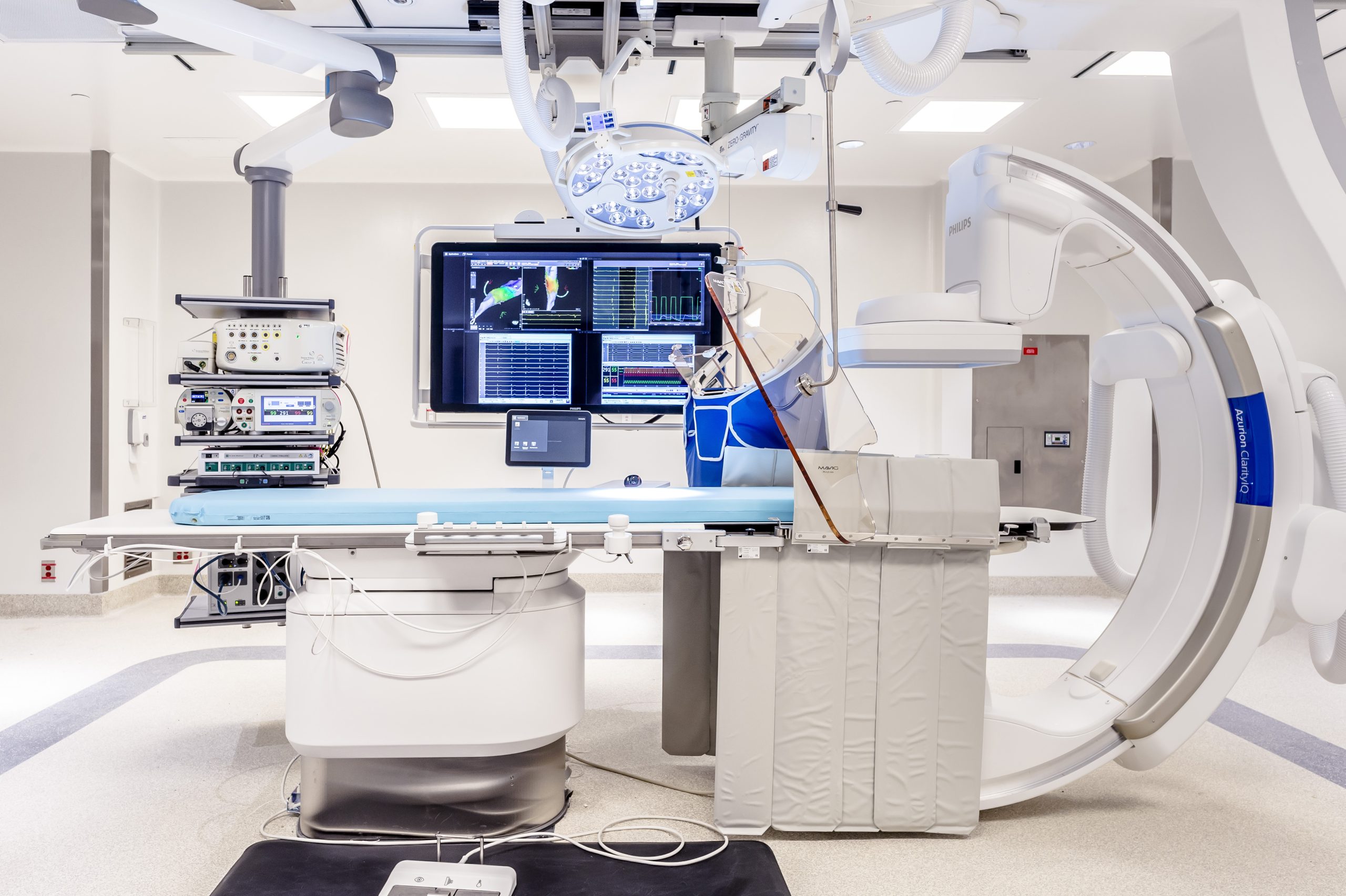
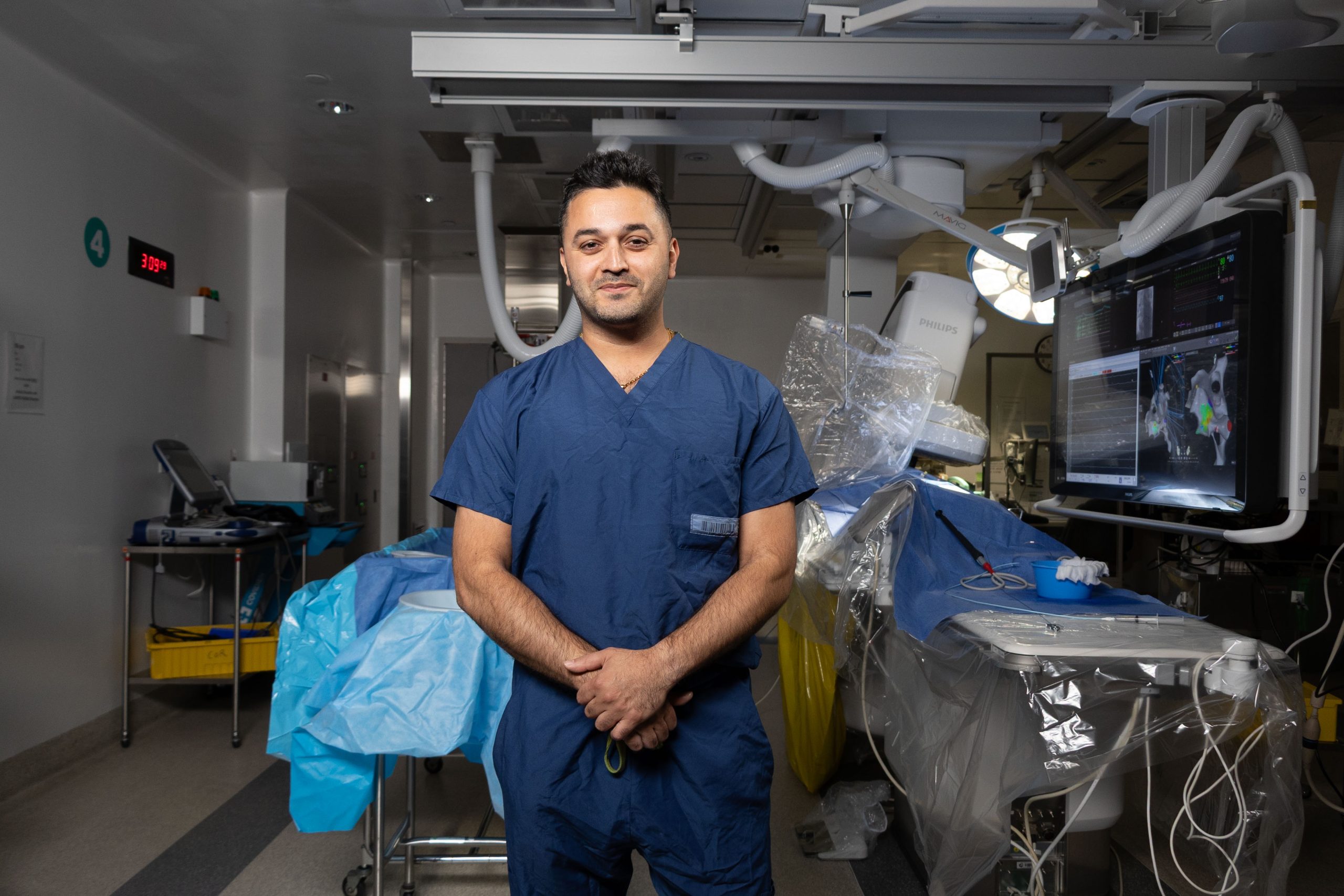
So, without delay, we bring them to the catheterization laboratory.
We then perform a percutaneous coronary intervention (PCI), also known as an angioplasty, to open the clogged artery.
We place a stent, which is a small metal sleeve that keeps the artery open. Our team was one of the first worldwide to use stents in STEMI patients.
Some patients we treated years ago who experienced heart tissue damage continue to come to our clinics for follow-ups.
I find it extremely rewarding to see how they and their loved ones have benefited from the care we provide.
Journey into Medicine
Born and raised right here in Ottawa, I have always felt a strong tie to the community and a desire to help others.
I would visit my grandmother in Sandy Hill. She lived with heart disease. Experiences like these inspired me to pursue a career in medicine.
My parents were so supportive. My Mother was a schoolteacher. My Father worked tirelessly and ran a sign-making business to put us through school.
I can still remember the sounds of his home printing press and the clacking sound of the equipment in the basement while I studied in the room above.
I had not planned to pursue a career in cardiology, but I encountered some incredible teachers early on. They “lit the spark” for me.
I met people like Dr. Wilbert Keon, Dr. Donald Beanlands, and Dr. Lyall Higginson. They all influenced me and changed the course of my life and career.
Reflecting on the last 40+ years of my career in cardiac medicine, I find it so encouraging how many more people we can now help.
With medical advancements we can now save more lives.
There is always more we can do and that is what keeps me going.
Always putting patients first and the good it creates inspires me every day.
At the Ottawa Heart Institute, the level of commitment and dedication from our medical staff for our patients is deeply rewarding.
Even at 2 a.m., the University of Ottawa Heart Institute is ready to respond. Remarkably, we have never had a team member miss a call.
February is Heart Month, and I have the distinct honour of being your 2025 Ambassador, representing the incredible team and patients at the Ottawa Heart Institute.
We look forward to seeing you “Light up the Capital Red.”
February is your opportunity to show your care for the Heart Institute by lighting up your home or business in a rosy glow, honouring the Institute’s work.
Please consider donating today. Our community match champions will match your gift.
When I reflect on what makes the Heart Institute remarkable, I realize it has much to do with
our community.
Please continue to support innovative cardiac patient care, prevention, education, and ground-breaking
research.
However, we can only continue this work with your help.
I care deeply about this place and our work. I know you do, too.
Sincerely,
Michel Le May, MD
Director, STEMI Program
University of Ottawa Heart Institute