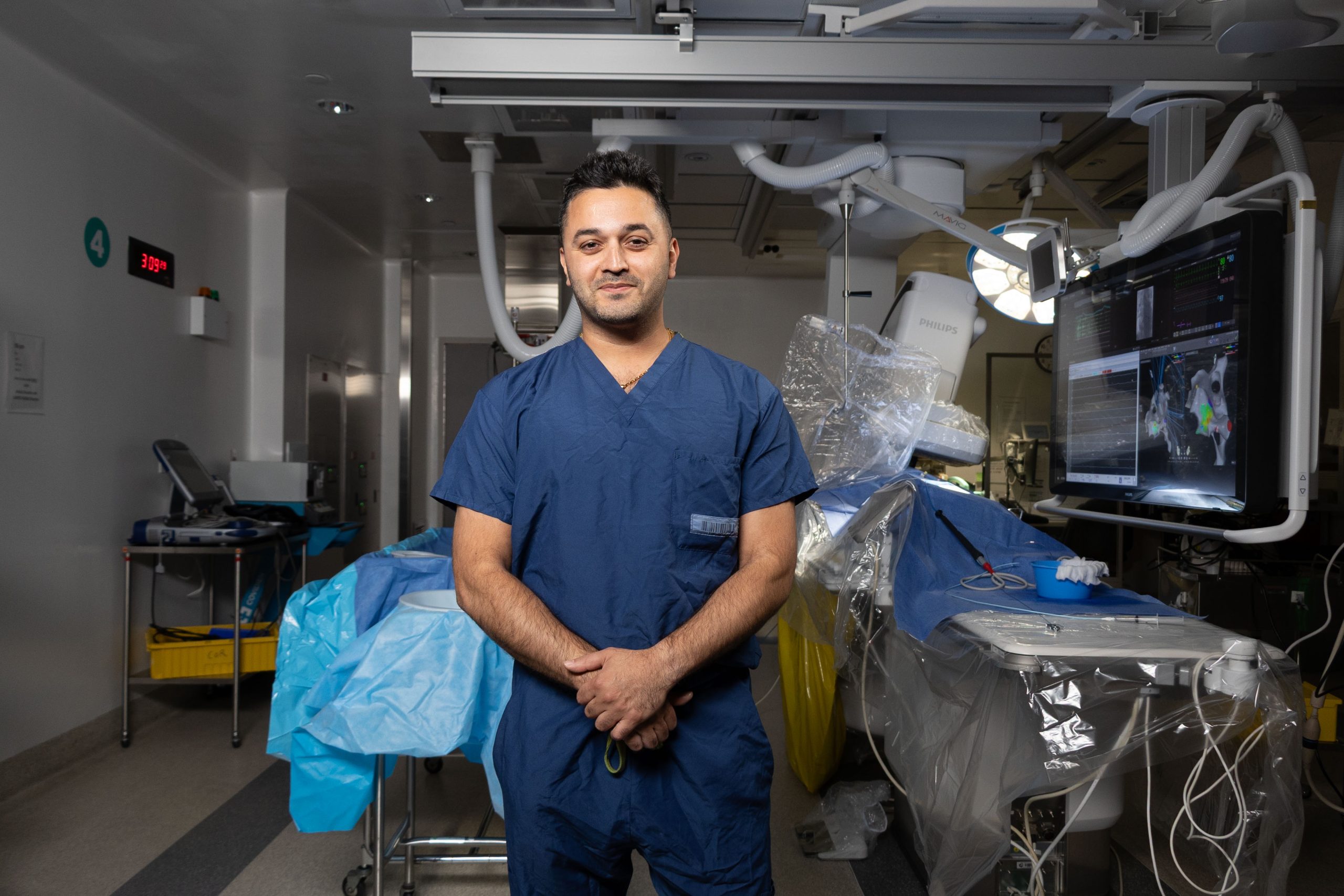
Mohamed Hussein Yusuf was born in Somalia to a pediatrician and registered nurse. The eldest of three siblings, Mohamed says that exposure to medical topics and discussions about health were woven throughout their daily lives. “My father, a physician, would take me with him to the hospital and I would hang out in his office while he rounded on patients. He would help me with my homework in between visits to the bedside.”
Tragedy struck in 1991 when Mohamed’s mother was killed in the Somali Civil War. After finding safety in Djibouti, the three young siblings experienced a second loss when Mohamed’s father passed away in 1996 from suspected heart and liver problems. These early experiences with loss and the medical field left a lasting impression on Mohamed, ultimately shaping his character and his future professional path.
In 1999, Mohamed’s family moved to Ottawa through a refugee application. He attended Louis-Riel high school and credits summers working at Tip Top Tailors for helping him to overcome shyness and shape his future. His personal history and the memory of his father’s health challenges eventually drew him toward a career where he could help others facing similar circumstances with both skill and deep compassion.
Encouraged by his teachers, Mohamed completed a degree in biology at the University of Ottawa. After meeting his wife, a teacher and translator, he studied first to become an RPN and then, through the University of Ottawa’s Honours Bachelor of Science in Nursing – Bridging Pathway, graduated as a registered nurse in 2018.
Mohamed says that when it was time to complete the final clinical placement component of his studies, the Heart Institute was at the top of his list. “I knew that I wanted to specialize and had always been intrigued by the anatomy of the heart and cardiology. I also remembered my father’s situation and really wanted to learn more.”
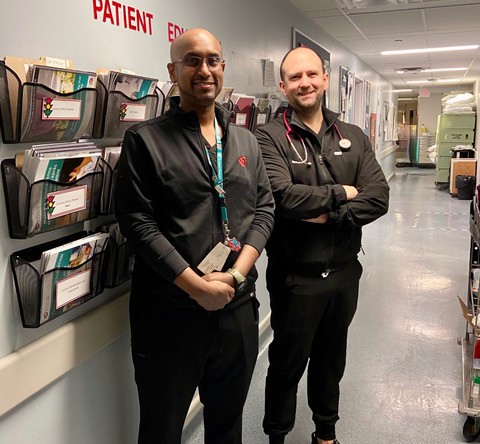
Impressed by how well the Institute treated its nurses and staff, Mohamed applied and was hired for a part time position that soon evolved into his fulltime dream job on H5.
Craving even more specialization, Mohamed pursued a position in the Intensive Care Cardiology Unit (ICCU). “To me, the ICCU was the Pandora’s Box of cardiology knowledge. The way the senior nurses carried themselves and shared their expertise made them seem like heroes to me. I needed to be part of that team.”
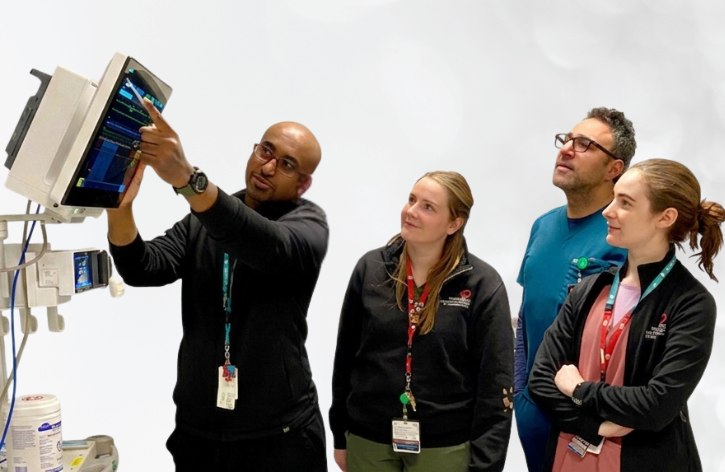
Now an ICCU nurse for several years, Mohamed says the teamwork required in the ICCU is an essential component of patient care. “Everyone rounds together. The doctors, physiotherapist, respiratory therapist and dietician are all here. The pharmacist sits at the next desk, and you can interact with everyone.
The unit cares for about 15 to 16 patients at a time, ranging in age from 18 to their 90s. We manage complex cardiac issues such as cardiogenic shock, heart failure, and STEMIs, as well as life-threatening cardiac arrhythmias and patients who have had Return of Spontaneous Circulation (ROSC) following a cardiac arrest. We also provide specialized care for significant cardiac valve problems, including Mitral Regurgitation (MR), Tricuspid Regurgitation (TR), and patients recovering from Aortic Valve Replacement (AVR).”
Each nursing shift starts with the review of lengthy reports, including patient history and detailed head to toe assessments, including the body’s systems, and plan for each. Says Mohamed, “Visits are made to each bedside where medications and charts are reviewed to make sure that everything is okay. Once that’s done, the nursing team shares information and asks questions. We determine areas of focus and work in a very choreographed way to keep a close eye on every patient.”
A proud member of the Rapid Assessment of Critical Events – or RACE – team, also known as the “ICU on wheels” Mohamed, in his role as an ICU nurse, joins other intensive care experts, including an Intensive Care Unit doctor and respiratory therapist, in responding to in-hospital needs all over the hospital.
For Mohamed, experiences with the RACE team provide regular examples of what makes the Heart Institute such a rewarding place to practice nursing. “I feel that my clinical judgment is truly valued during critical interventions. We work as a cohesive team where the nurses’ observations are essential to the decision-making process, especially when we are navigating complex cases together.”
“We have several fascinating studies underway, notably one led by Dr. Mathew’s cardiology team,” Mohamed says. “Our focus is on the impact of inotropic medications and how they can best support the heart during the critical stages of cardiogenic shock.” He notes that the whole team is encouraged to participate in this innovative research designed to improve the lives of cardiac patients. “The amount of research in our unit is amazing. The doctor runs the study, obtains consents and places the orders, but the nurses get to act on them, by conducting the required treatments and monitoring. It is very exciting and inspiring.”
Mohamed is equally impressed by the advancements led by Dr. Marc Ruel, who is pioneering efforts to make cardiac surgery less invasive. He points to Dr. Ruel’s world-renowned work in multi-vessel minimally invasive coronary artery bypass surgery and the Institute’s cutting-edge robotic cardiac surgery program as examples of the innovation that makes the Heart Institute a leader in the field.
Asked to describe nursing as a career, Mohamed chooses words like selfless and rewarding. “The nurses at the Heart Institute really give their best and their all every single shift. When I’m at work I forget about everything else and focus on the job. My colleagues are awesome and if it weren’t for them, I don’t think I would enjoy my job as much.”
He also finds gratification in the words of grateful patients and the success stories. “Whenever we can save a patient or help a patient who is very sick get better, the joy is palpable across the unit. However, when we lose a patient, it is the opposite. You can really feel the dark cloud of sadness all around us.”
To the patients of the Heart Institute, Mohamed would say that they are in the best hands. “I usually tell them, ‘You are getting the best care there is. You will be cared for by a multidisciplinary team, and you can trust them. Somebody is always there watching out for you, and this is one of the safest places to be when you’re sick.”
Mohamed’s family would likely be very proud to know that his dinner table conversations still include plenty of medical conversations and encouragement. The father of three says that his middle child, age eight, is already planning a career in nursing or medicine. Smiling he says, “It sounds funny to say, but the desire to be a nurse is in the blood, and it is very contagious.”
Make your legacy one of life-saving advancements. Support the work of the Heart Institute Nurses today!