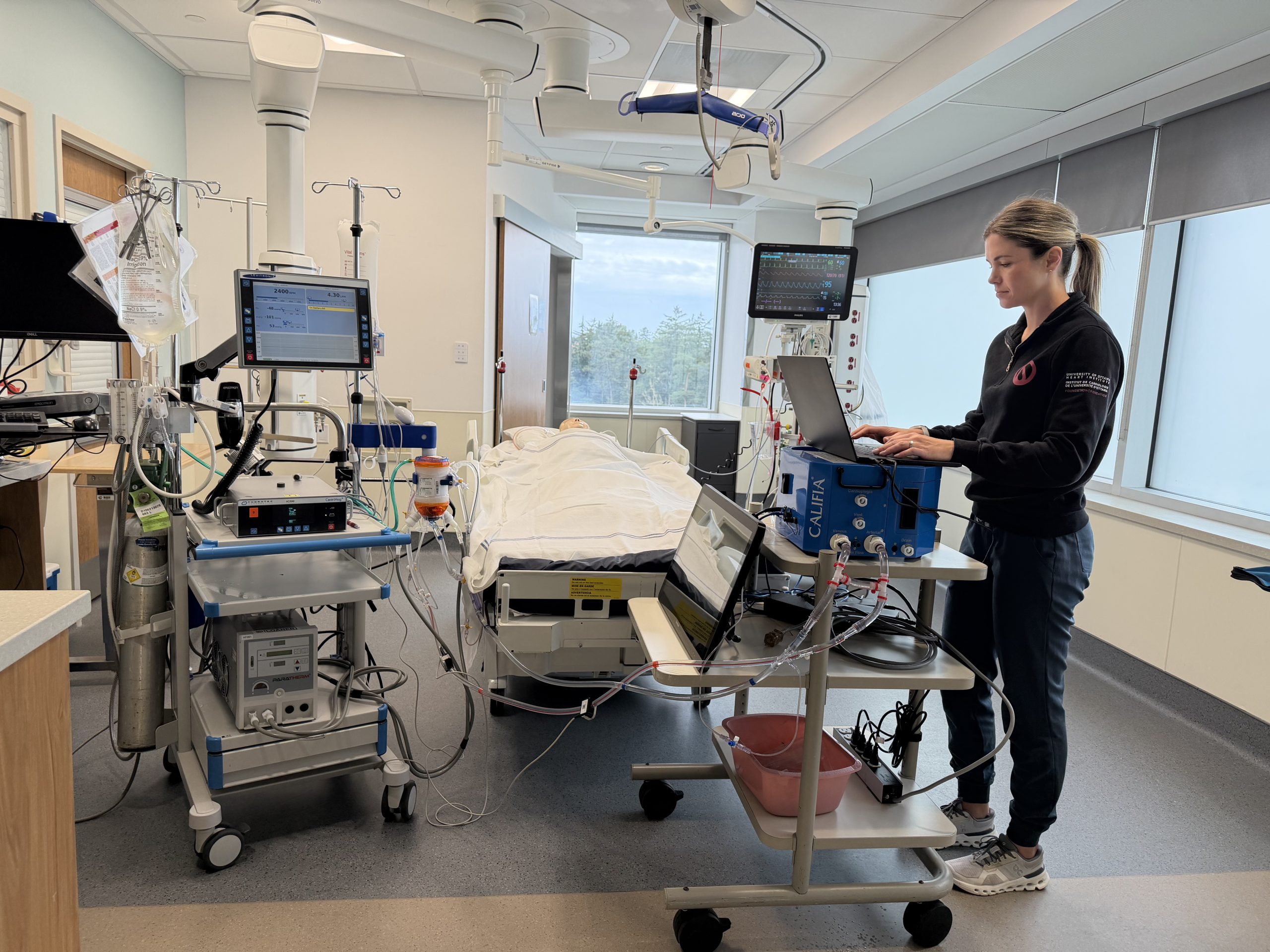
Rushed through the doors of the ICCU, directly from the field, patients often arrive in their street clothes, without an IV, and in a profoundly unstable state. With no formal triage zone, staff have mere minutes to make the right diagnosis and start lifesaving treatment.
The Heart Institute’s Intensive Cardiac Care Unit (ICCU) receives some of the most complex cardiac patients in the country. Dr. Rebecca Mathew, Medical Director of the ICCU, says that the unit’s ability to manage a high volume and wide range of cardiac conditions provides patients with access to the most comprehensive care available. “Every shift is different. We can start a day by stabilizing a patient with a STEMI, then perform CPR and airway management for a patient with cardiac arrest, and an hour later, be resuscitating a patient with cardiogenic shock – every day is different than the one before.”
A board-certified cardiologist and intensivist, and the first cardiologist with dual training to be hired in Ottawa, Dr. Mathew loves her job and supports the Heart Institute’s national leadership in the growing trend of hiring dual-trained cardiac-intensivists to guide clinical care in the ICCU. “I chose this career because it is a privilege to meet people on the worst day of their lives — we are their anchor during the storm that is cardiac critical illness.”
Passionate about teaching, Dr. Mathew says that the Institute attracts top trainees who graduate prepared for anything. “I tell residents to train at a centre that will push you to your absolute limits but with a safety net in place. That way, you leave possessing the skills and confidence to deal with any crisis in front of you and maintain the deep sense of humility that only clinical medicine builds.”
As the OHI serves as the regional hub of specialized and complex cardiovascular care, reaching almost two million people with cardiac services, the ICCU also functions as a highly active think tank, creating the ideal conditions for cutting edge research in cardiac critical care.
The co-principal investor of the CAPITAL Research Group, Dr. Mathew is grateful to stand on the shoulders of the “giants in research” who decided early on that the ICCU would lead clinical trials. “Our work focuses on pragmatic research questions that arise from care at the bedside. My mentors have always said that it is impossible to be passionate about clinical medicine and not be passionate about research. You should be asking why, and if you are asking why and not finding the answer, that should prompt a research question.”
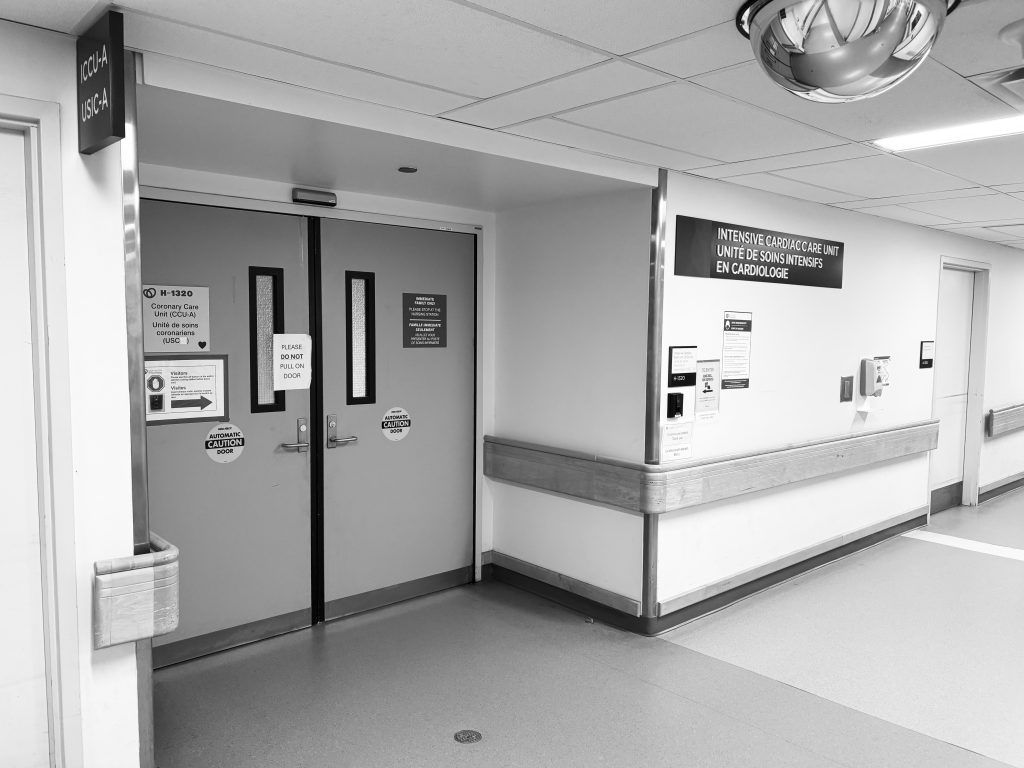
The Intensive Cardiac Care Unit provides around-the-clock care for some of the region’s most complex cardiac patients.
Describing research in the ICCU as a 24/7 team effort, Dr. Mathew credits the large number of residents, fellows and nurses, the team’s official and unofficial co-investigators, as literally being the lifeblood of the lab’s work.
Troubled by the high mortality rates for patients with cardiogenic shock and the lack of robust evidence to support therapies to improve outcomes, Dr. Mathew launched the Dobutamine Compared with Milrinone in Cardiogenic Shock (CAPITAL DOREMI) clinical trial to better understand and treat this condition, in which a primary heart issue prevents adequate blood flow to the body’s organs. Dr. Mathew explained that historically, two medications, milrinone and dobutamine, both inotropes, have been widely used to treat cardiogenic shock in North America and she wanted to resolve ongoing debate within the cardiac critical care community as to which drug provides better outcomes for patients. CAPITAL DOREMI became the first-ever head-to-head clinical trial comparing these two medications in cardiogenic shock. The study, which enrolled 192 patients, found no significant difference in key patient outcomes, demonstrating that the treatments were equivalent.
Published in the New England Journal of Medicine, the trial reinforced that clinicians should select the inotrope that is best suited to an individual patient’s needs. At its heart, CAPITAL DOREMI served to advance the principles of evidence-based medicine and patient-centred care.
Now in the process of wrapping up CAPITAL DOREMI 2, a larger multi-centre trial of 346 patients, Dr. Mathew is investigating whether, given their unclear benefits and negative side effects, patients require any form of specialized inotropic support in the initial treatment of cardiogenic shock.
Proud of her lab’s research endeavors and the clinical work happening in the Institute’s ICCU, Dr. Mathew says that by undertaking research and continuing to build on the research culture in the ICCU, residents and staff in the unit have become more confident in doing higher risk, high-reward clinical trials. “It is exciting to see how evidence-based we have become in our decision-making process in the ICCU.
Research is highly valued at the Heart Institute and we are using the results of these key studies every day to provide the best clinical care for our patients.”