
Dr. David Birnie, Division Head of Cardiology, is working to make blood thinners history.
Every breakthrough begins with a question.
“If my ablation was successful and my atrial fibrillation is gone or greatly reduced, why do I still need to take a blood thinner?”
What started as a patient-led concern fueled a powerful search for answers. Today, thanks to the commitment of a team driven by the Institute’s Dr. David Birnie, Division Head of Cardiology, results from the Optimal Anticoagulation for Enhanced Risk Patients Post-Catheter Ablation for Atrial Fibrillation (OCEAN) trial will help change clinical practice globally.
Co-led by the Ottawa Heart Institute and the Research Institute of the McGill University Health Centre, the OCEAN trial was born from the voices of patients and a passionate team of experts.
Dr. Birnie, OCEAN’s co-principal investigator, says that the study grew from a pledge to challenge a long-standing practice.
“Historically, based on the best available scientific evidence, the standard of care has always been to keep patients on an oral anticoagulant (OAC), or blood thinner, after atrial fibrillation (AF) ablation to reduce the risk of stroke.”
While blood thinners are highly effective at preventing strokes, they also come with downsides. Common side effects related to bleeding, which can be life-threatening, affect quality of life, create anxiety and inconvenience, and sometimes lead patients to seek medical care or alter their daily activities.
Says Dr. Birnie, “This work was so important because atrial fibrillation is now very common affecting an estimated one in 10 people over the age of 80.”
Work began in 2012 with brainstorming sessions among Canadian ablation specialists and a hypothesis that a successful catheter ablation would reduce a patient’s arrhythmia, or irregular heartbeat, to the point that their risk of stroke would also be lowered.
Sharing that this type of research is extremely difficult to complete because of its magnitude and complexity, Dr. Birnie credits the Institute and community for making it possible.
“Support from donors for the Institute, through the Foundation, helps to launch innovation and create a recognized world-leading centre that attracts the world-class physicians who can run projects like this. There are few institutions in Canada that can lead and coordinate trials as big as OCEAN. The success of the OCEAN trial is just one of the reasons why the Heart Institute is such an inspiring place to work.
A key step was securing adequate funding ($8 million) from multiple partners. These funding agencies look at credibility, feasibility and track record as key factors in their decision to fund, and UOHI ticked all these boxes.”
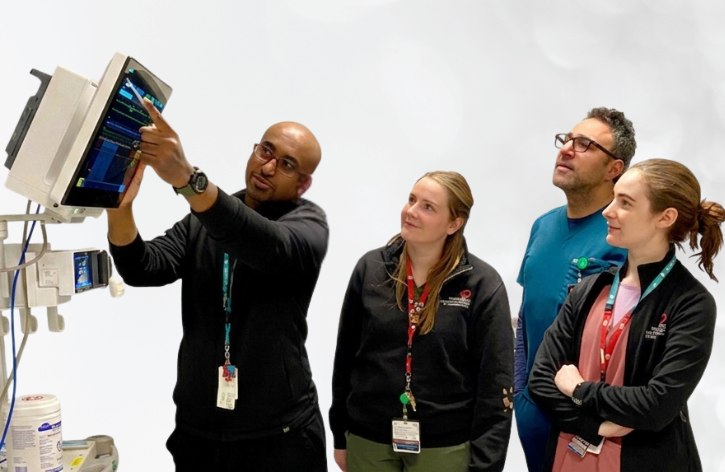
An international randomized study of 1,284 patients who had undergone successful AF ablation at least one year earlier, the OCEAN trial involved 56 centres and a huge team including hundreds of doctors, nurses and research coordinators.
Study results, announced in late 2025, revealed that the overall risk of stroke and related events after successful AF ablation was so low that it was as if the patients had never had atrial fibrillation.
For low-to-moderate-risk patients who remain in a normal heart rhythm and have no atrial fibrillation for at least one year after a successful AF ablation, stopping blood thinners may now be a safe and reasonable option.
Dr. Birnie describes the response to OCEAN as “tremendous” with global interest.
“This is really a game changer for a substantial number of patients all over the world. I’ve had various estimates that there likely are at least half a million patients a year who have an AF ablation worldwide. In Canada alone, it’s probably at least 15,000 patients a year. For many of them, if the ablation is successful and their risk of stroke is not too high, then they likely can be considered for stopping their OAC.
I am very proud of this enormous team effort. At its core, the OCEAN Study is about advancing evidence-based care by listening to patients and striving to improve both safety and quality of life.”
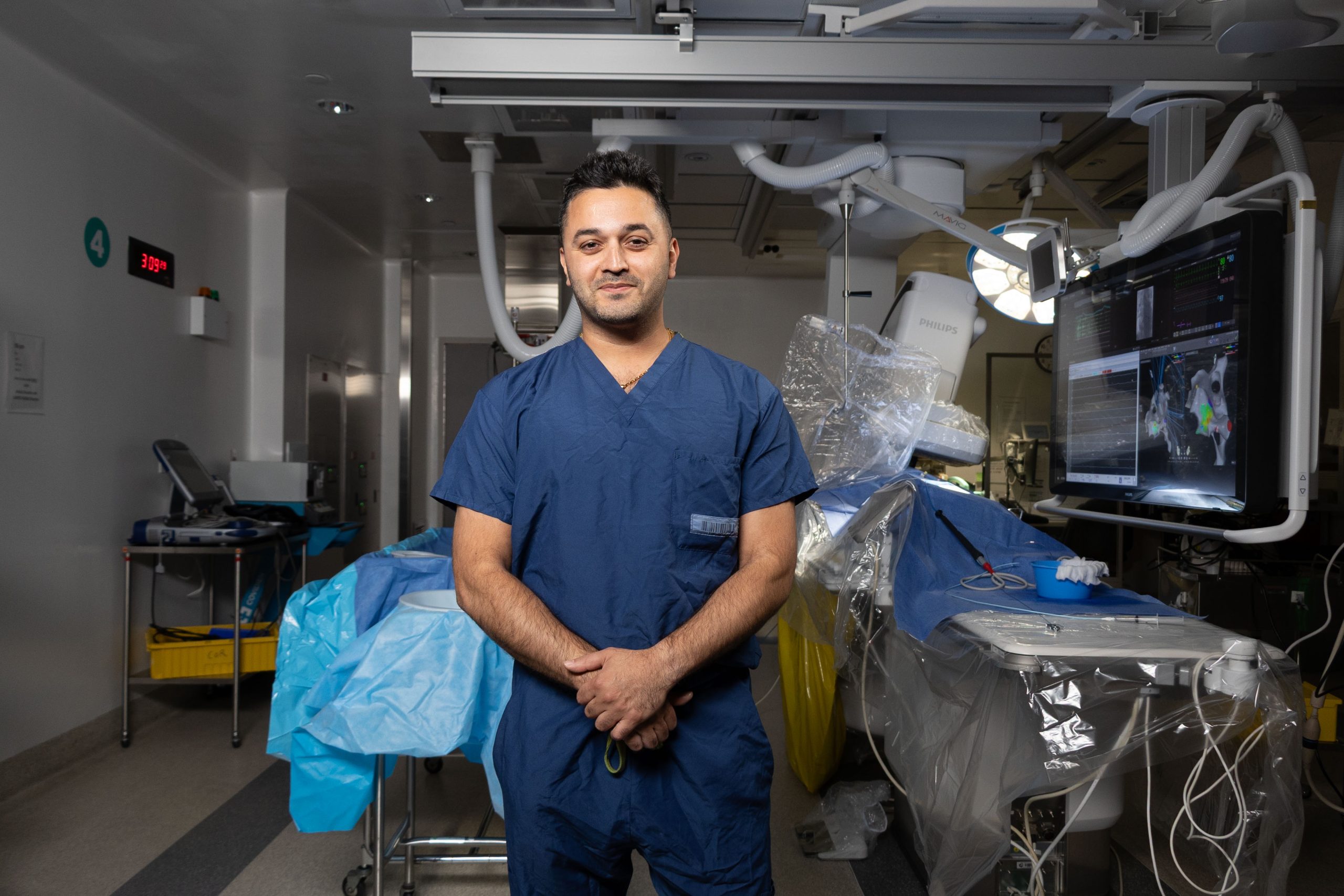
Dan Pak joined the OCEAN study following a successful catheter ablation performed by Dr. Golian.
Proud to have played a role in advancing this research, and grateful to the Heart Institute for a second chance, Dan is hopeful that OCEAN’s findings might mean a future without blood thinners.

“Running and staying active are my passions. Unfortunately, life on blood thinners turns every minor bump into a major bruise. I am also more physically cautious due to the risks associated with bleeding.
“The opportunity to come off blood thinners would open the door for me to become the best version of myself, both physically and psychologically.”
Give today to help researchers answer the questions that matter most to patients and create better outcomes for generations to come.