It strikes without warning. One day you’re enjoying time with family, going for a walk, or making plans with friends. The next brings a racing heartbeat, exhaustion, shortness of breath, and the fear of worsening symptoms.
For many people living with atrial fibrillation (Afib), the most common type of irregular heart rhythm, this is their reality. In fact, it is estimated that one in three people will develop Afib during their lifetime. The demand for gold-standard Afib treatments is also growing at an extraordinary pace. Over the past four years, the number of catheter ablations administered in Ontario has increased 143%.
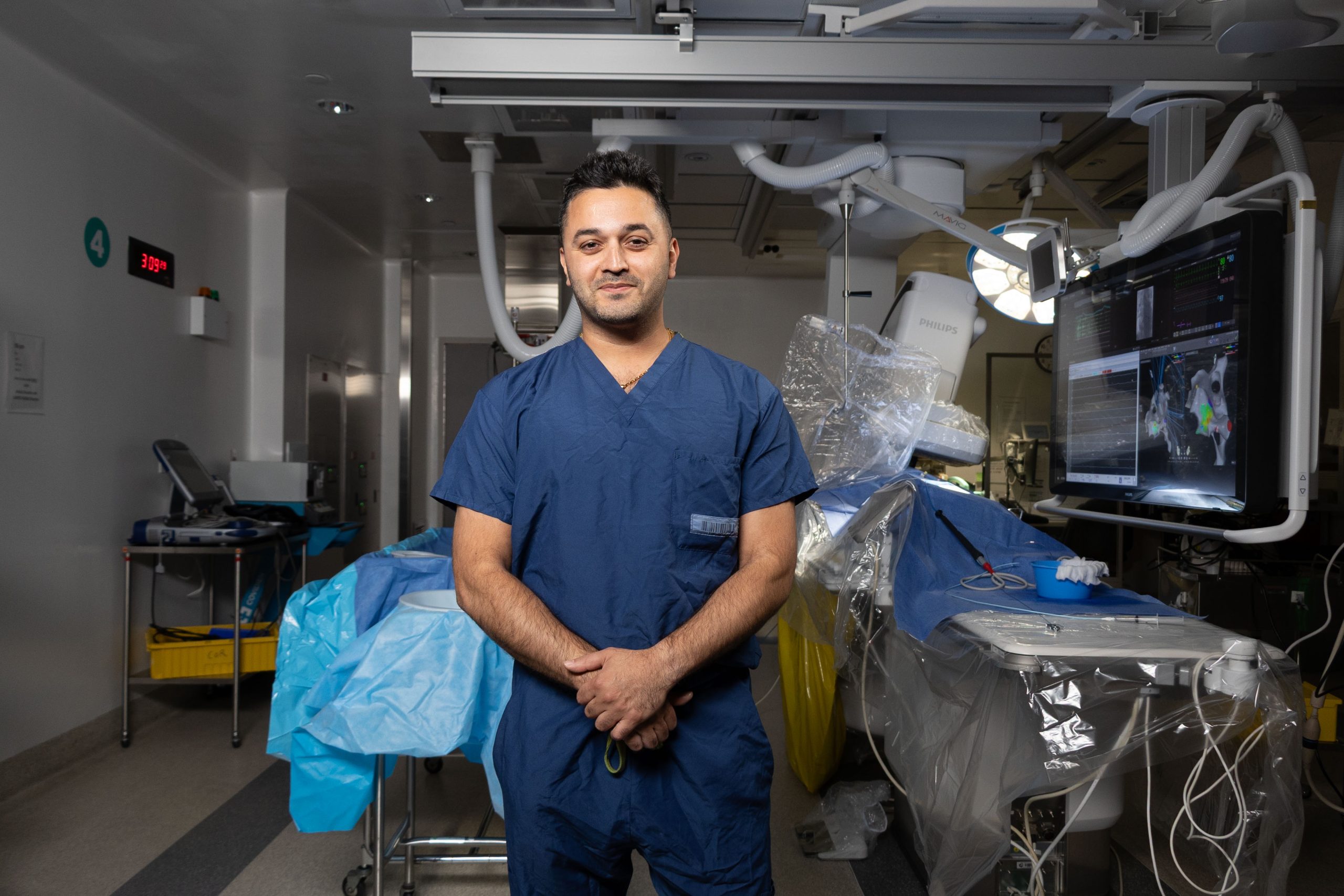
In my role as a cardiologist and electrophysiologist at the Heart Institute, my career is focused on testing patients for cardiac arrhythmias, also known as irregular heart rhythms, and treating the symptoms associated with these conditions.
Thanks to support from donors like you, and world-renowned recognition of the Institute’s expertise, our cardiologists are positioned first in line to receive and offer patients best-in-class technology and state-of-the-art equipment.
Enhanced technology and work to improve the safety and outcomes of this intervention has resulted in increased referrals and the longest provincial wait list of any cardiac procedure (up to two years) or patients seeking catheter ablations at hospitals across Ontario.
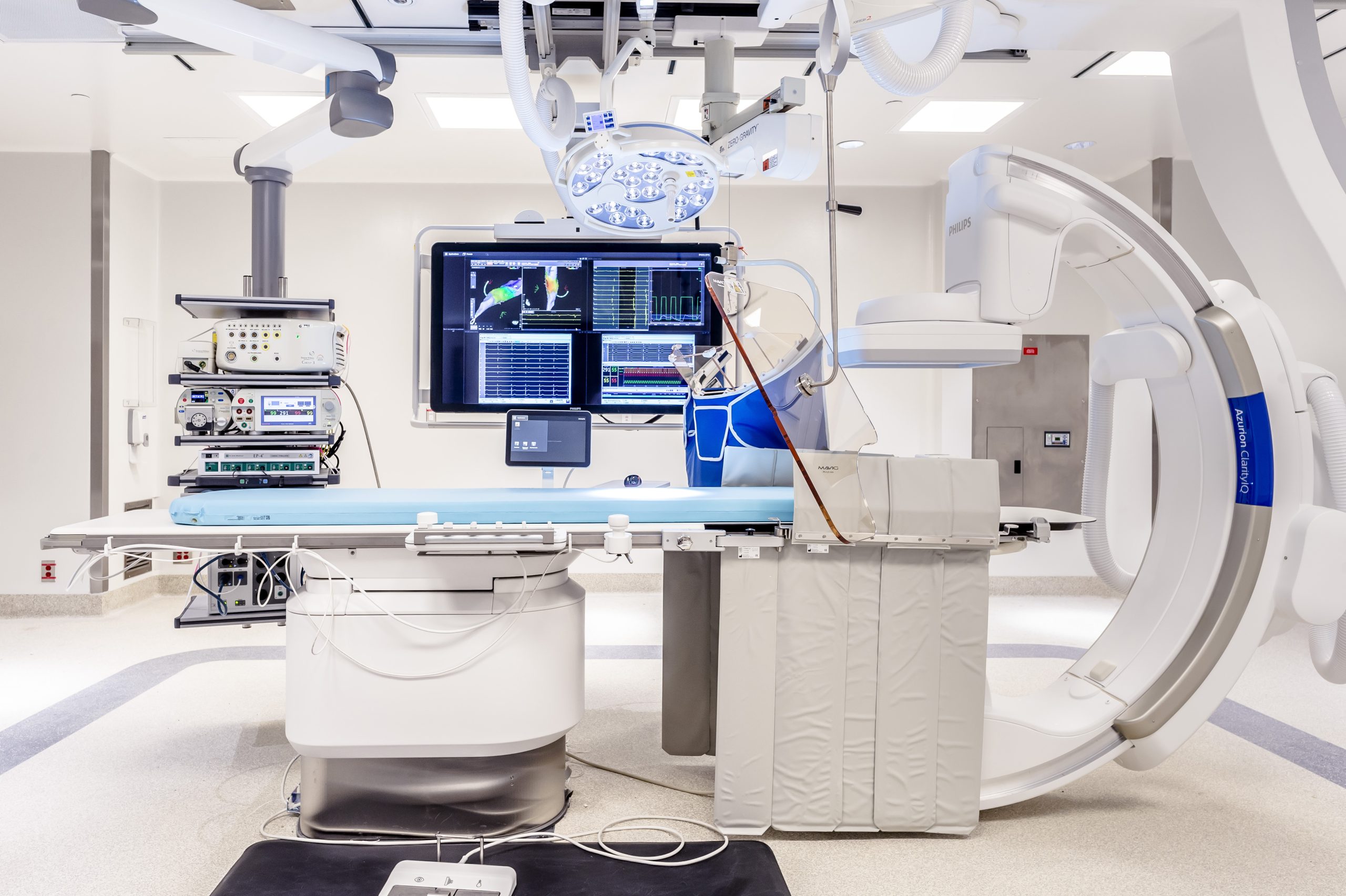
Performed by our team in the electro-physiology lab this minimally invasive intervention delivers focused energy to a specific spot inside the heart muscle to eradicate a faulty circuit and restore the normal rhythm of the heart.
As the development of an arrhythmia can be life-limiting for many patients, causing palpitations, psychological stress, reduced physical activity, blood clots and strokes, a catheter ablation can reduce uncomfortable symptoms, provide an opportunity to taper challenging medications, such as blood thinners, and improve their overall quality of life. This form of treatment can also prevent a significant percentage of patients living with paroxysmal Afib, or bouts of Afib that come and go, from developing into a more serious condition called persistent Afib.
Catheter ablation is the fastest developing area of cardiology right now, and the Institute is at the forefront of providing patients with this example of top-notch care. Revolutionary innovations in ablation technology over the last five years have directly transformed patient outcomes and the next generation of equipment is already available and waiting.
Today’s technology guides a safer path to targeted areas within the heart, is less physically demanding on the body and, due to a shorter procedure time, reduces risks associated with lengthy anesthesia. Less complications and faster recovery times also mean that patients who would have previously required overnight monitoring are now sent home the same day to sleep in their own beds.
With these advancements, and the dedicated expertise of our collaborative team, we have progressed from being able to complete one catheter ablation a day to four of these high-quality interventions.
Our team at the Heart Institute performs approximately 1,100 to 1,200 catheter ablations annually on patients across the region. Additional funding to expand our clinical capacity would make it possible to double this number.
Through the belief and generosity of our community the Institute is already setting the pace in the world when it comes to arrythmia management. People from around the globe choose to train here, wanting an opportunity to join our team at the forefront of care.
Your partnership is critical as we commit to supporting a growing population of those living with cardiac arrhythmia, with essential resources, education of tomorrow’s experts, and leading-edge patient care.
Yours,
Dr. Mehrdad Golian
Director of Electrophysiology and Arrhythmia Services
Every day a patient spends waiting for treatment is another day spent living with uncertainty, symptoms, and the risk of complications. Your gift today can help expand access to catheter ablation and bring life-changing care to more patients, sooner.